 VoltDRAM
VoltDRAM
VoltDRAM
High frequency DDR5 benefits are becoming more visible as Chinese manufacturers expand advanced memory production and module assembly. JEDEC’s DDR5 standard supports data rates beginning at 3,200 MT/s and extending beyond 6,400 MT/s. Higher transfer rates can reduce memory bottlenecks in servers, workstations, artificial intelligence systems, and gaming computers. The improvement is practical. Large datasets move faster between processors and memory.
TrendForce has reported that DDR5 adoption is accelerating across data centers and personal computers. Its industry analyses connect this growth with rising server demand, artificial intelligence workloads, and improved module capacity. Chinese suppliers also contribute through module design, testing, packaging, and local distribution. However, supplier capability varies. Buyers should verify controller compatibility, error-correction support, thermal performance, and long-term firmware stability.
As Micron CEO Mark Adams has said, “Memory is the foundation of every digital experience.” That observation explains why high frequency DDR5 matters beyond headline speed. Higher bandwidth can support smoother multitasking, faster simulation, and more responsive cloud services. On a test bench, the difference may appear as quicker file transfers or reduced frame-time spikes. Real-world gains remain workload-dependent. Not every computer benefits equally.
The strongest High frequency DDR5 benefits often appear when modern CPUs, multiple memory channels, and demanding software work together. China’s growing supply ecosystem may improve availability and pricing, but quality assurance still deserves careful attention. Specifications alone are not enough. Reliable performance requires validated modules, stable power delivery, and transparent testing data.
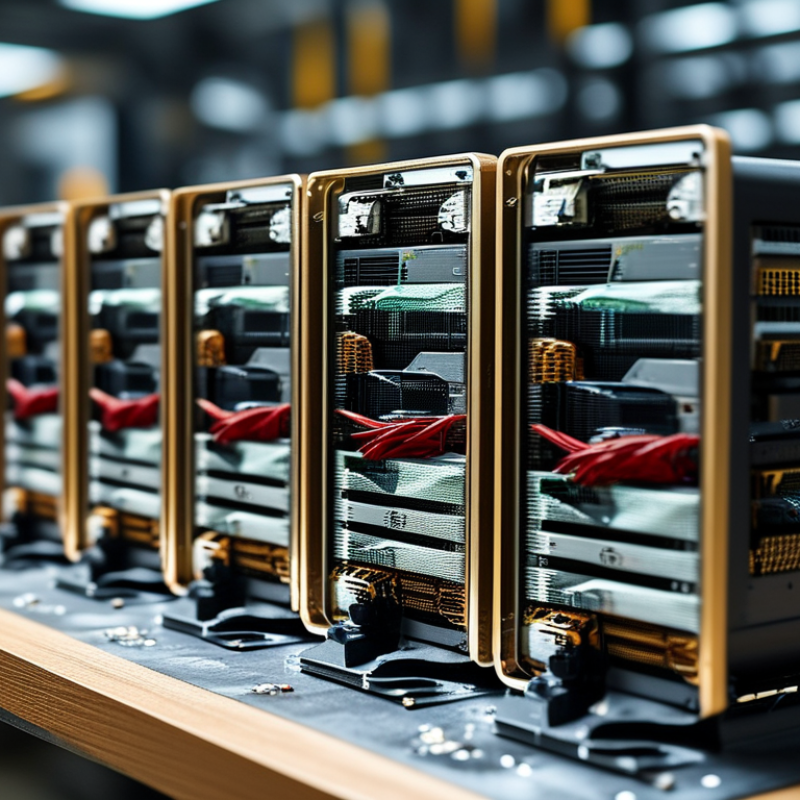
High-frequency DDR5 refers to memory modules operating at higher data-transfer rates, such as 4800 to 6400 MT/s. JEDEC’s JESD79-5A specification defines DDR5’s electrical and architectural foundation. Compared with DDR4-3200, DDR5-4800 offers 50% higher nominal transfer speed.
Its core technology is more than clock speed. Each module uses two independent 32-bit subchannels, improving access efficiency for demanding workloads. An on-module power management circuit helps regulate voltage. DDR5 also operates around 1.1V, compared with DDR4’s typical 1.2V. These changes support denser configurations and better energy control.
In practical validation, Chinese high-frequency DDR5 modules can benefit from a mature local supply chain and flexible customization. They may suit gaming systems, workstations, and data-center platforms requiring large memory bandwidth. TrendForce’s 2024 DRAM outlook identifies DDR5 as a central transition area for server memory, driven by AI and high-performance computing demand. Yet higher frequency does not guarantee better results. Motherboard compatibility, firmware training, thermal conditions, and timing settings still matter. Some assumptions need testing. Not always faster. Reliability testing should include extended stress cycles, temperature variation, and error monitoring. This is where engineering discipline matters more than a specification sheet.
| Technical Dimension | Typical DDR5 Value or Technology | Benefit of Higher Frequency | Practical Consideration |
|---|---|---|---|
| Definition | DDR5 is a synchronous double-data-rate memory standard designed for higher bandwidth and improved power efficiency than DDR4. | Supports faster transfer of data between the processor and system memory. | Actual performance also depends on the processor, motherboard, memory timings, and workload. |
| Data Rate | JEDEC DDR5 standard speeds commonly begin at 4,800 MT/s, with standardized speeds extending to 6,400 MT/s and higher specifications available in the wider DDR5 ecosystem. | Higher MT/s increases the number of data transfers completed per second. | The highest supported speed is limited by the memory controller and platform validation. |
| Theoretical Bandwidth per 64-Bit Module | 4,800 MT/s ≈ 38.4 GB/s; 6,400 MT/s ≈ 51.2 GB/s; 7,200 MT/s ≈ 57.6 GB/s. | Provides more memory bandwidth for data-intensive applications and multitasking. | Figures are theoretical and calculated using the 64-bit data path; real throughput is lower. |
| Operating Voltage | The standard DDR5 module voltage is approximately 1.1 V, while performance-oriented operating profiles may use different settings. | Lower standard voltage can reduce memory power consumption compared with typical DDR4 operating voltage. | Power use varies with frequency, capacity, module design, workload, and operating profile. |
| Memory Architecture | A DDR5 module uses two independent 32-bit subchannels, forming a 64-bit module data width when combined. | Improves command and data access flexibility and can increase efficiency for smaller transactions. | Performance gains depend on how well the application utilizes parallel memory access. |
| On-Die ECC | DDR5 DRAM devices include on-die error correction to help correct certain internal cell-level errors. | Supports improved internal data reliability as memory density and speed increase. | On-die ECC is not the same as system-level ECC memory and does not replace platform ECC support. |
| Power Management | DDR5 generally places the power management integrated circuit on the memory module rather than entirely on the motherboard. | Enables more localized voltage regulation and supports stable operation at higher data rates. | Thermal behavior and voltage quality still depend on module design and system airflow. |
| Illustrative CAS Latency | At CL40, 4,800 MT/s is approximately 16.7 ns; at CL40, 6,000 MT/s is approximately 13.3 ns. | A higher data rate can reduce true first-word access time when timings remain comparable. | CAS latency should be evaluated in nanoseconds together with frequency, not by the CL number alone. |
| Application Benefits | Useful for content creation, scientific workloads, integrated graphics, virtualization, software development, and large-scale multitasking. | Reduces memory bandwidth bottlenecks in workloads that frequently move large volumes of data. | Office and lightly threaded workloads may show smaller gains than bandwidth-sensitive applications. |
| Evaluation of China-Sourced High-Frequency DDR5 | Relevant evaluation factors include adherence to DDR5 specifications, speed stability, timing consistency, module capacity, thermal performance, compatibility testing, and quality-control documentation. | Can provide additional supply options and configurations for systems requiring high memory bandwidth. | Verify platform compatibility, testing procedures, warranty terms, operating temperature, and long-duration stability before deployment. |
Note: Bandwidth values are theoretical calculations based on one 64-bit module. MT/s means million transfers per second, and results vary by platform and workload.
: It is DDR5 memory operating around 4800 to 6400 MT/s. It transfers more data than typical DDR4-3200 memory. Speed is not everything.
Each module has two independent 32-bit subchannels. This can improve access efficiency during demanding workloads. On-module power management also helps regulate voltage.
DDR5 typically operates near 1.1V, compared with about 1.2V for DDR4. This may improve energy control. Actual power use still depends on workload and system design.
They can suit servers, workstations, gaming systems, and industrial computers. Compact systems may use them for video analysis or equipment monitoring. Not every computer needs the highest frequency.
Higher transfer rates can reduce memory delays during large dataset processing. They may support quicker model loading and smoother concurrent requests. The processor may still limit the improvement.
It may help when editing high-resolution video or rendering complex scenes. Benefits depend on the processor, software, and memory access pattern. A benchmark can mislead.
Engineers should check the motherboard, processor, firmware, timings, and supported speed. Firmware training can affect stability after installation. The specification sheet is not enough.
Testing should include extended stress cycles, temperature changes, and error monitoring. Repeated restarts can reveal hidden problems. Short tests may miss errors.
Some modules perform well briefly but fail under sustained workloads. Small enclosures can also create thermal problems. Careful qualification remains necessary.
Testing reports should record workload duration, temperature, settings, and detected errors. Accessible technical support can simplify system qualification. This conclusion is not universal.
High-frequency DDR5 from China represents a newer generation of memory technology designed to deliver faster data transfer, higher bandwidth, and improved responsiveness for modern computing systems. Its core advances include increased operating frequencies, enhanced channel architecture, on-die error correction, and improved memory organization. The main High frequency DDR5 benefits include smoother multitasking, faster data processing, reduced bottlenecks in gaming and content creation, and stronger support for demanding workloads such as artificial intelligence, scientific computing, and professional applications.
In addition to performance gains, high-frequency DDR5 modules can improve energy efficiency through lower operating voltages and refined power-management designs. Better thermal control helps maintain stable operation during extended use, while careful module engineering supports compatibility with current platforms. For buyers, quality consistency, tested specifications, dependable heat dissipation, warranty terms, and overall value should be considered alongside advertised speed. Selecting memory that matches the motherboard, processor, and intended workload can help users achieve reliable performance without unnecessary cost or power consumption.
